
Tuesday, November 30, 2010

Panel by Panel: November 2010 in Review

Welcome back to Panel by Panel. Since I'm not doing a review of everything I read anymore, I thought this would be a cool way to talk about my reading in more general terms.

My 2010 reading list (including a complete rundown of November's reads) is here.

Let's look at how November's readings shaped up, shall we?
Indie Stuff (5)
  1. Mysterious the Unfathomable by Jeff Parker and Tom Fowler (2010)
  2. Fingerprints by Will Dinski (2010)
  3. Potter's Field by Mark Waid and Paul Azaceta (2010)
  4. Strange Tales by Various (2010)
  5. Chew Vol 1 by John Layman and Rob Guillory
Good Stuff Under the Radar

In a month that wasn't my best for reading, a few comics really stood out. Mysterious the Unfathomable and Potter's Field were both great comics that I hope my reviews can boost a few sales for. They're established creators playing with their own works, and show that it's still possible to create a comic that has a sense of wonder or excitement while also feeling very modern. I was also happily surprised by Fingerprints, a comic I wasn't sure if I'd like but had a good, Dan Clowes-like story within. Look for a review of that one soon. The only real disappointment was Chew, a series I'd heard good things about but that just didn't work for me. The premise of knowing the life of what you eat is cool, but it seems to get used more to make gross jokes than sharp storytelling. Just not to my taste, if you'll pardon the pun.

Favorites: Potter's Field, Mysterious, Fingerprints

No Need to Hit the Bookstore for: The Strange Tales anthology was good, but I didn't love it as much as I thought I might. Chew was not as good as I'd hoped.

Manga/Manhwa (4)

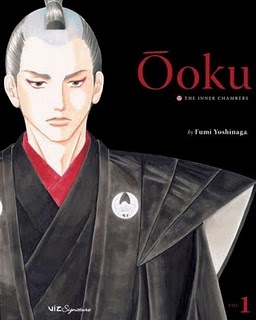
  1. Ooku The Inner Chambers Vol 2 by Fumi Yoshinaga
  2. Emma Vol 7 by Kaoru Mori
  3. Jormundgand Vol 1 by Keitaro Takahashi
  4. One Piece Vol 1 by Eiichiro Oda

Hug Your Favorite Translator

I'm still not reading a lot of manga, but when one of them is Emma, all is forgiven. I love that series so much, and I wish it was still in print. On the other hand, while I generally like Fumi Yoshinaga, I'm not feeling Ooku at all. The second volume plodded for the most part, with entirely too much exposition, much of it in "Fakespeare" as it was dubbed on Twitter. After much thought, I've decided to take it off my reading list. A shame, because I like historical period pieces, such as Cantarella, even if they take liberties. I just can't get over the aggressive telling, not showing. Combined with the bad translation, it's just not a fun read. On a completely different note, Jormundgand was popcorn action flick fun and I'm now a part of the One Piece Appreciation Society (though I refuse to try and collect all of the volumes--for now).

Favorites: Emma, of course, and One Piece.

No Need to Hit the Bookstore for: Sadly, I'm finished with Ooku, and I don't recommend that anyone pick it up, despite the usually solid creator.

Mini-Comics/Zines (11)

  1. Carl Finds Love 1 by Sara Lindo
  2. Carl Finds Love 2 by Sara Lindo (2010)
  3. Miss Sequential #2 by Marissa Falco
  4. Merman Issue 4 by Joey Weiser (2010)
  5. Spaz! #3 by Emi Gennis
  6. Zinc Comics Presents Annual by Brian Payne
  7. Costumed Crimefighter Comics #3 by Josh Tonn
  8. The House of Schmerz by CAD
  9. Necrocomicon #1 edited by Brian Ehpienpreis
  10. Spare Parts by Anthony Woodward (2010)
  11. Deafula by The City on Fire (?) (2010)

Mini-Comic Roulette

I didn't read quite as many mini comics this month, and those I did were more of a mixed bag than last month. Joey Weiser and Sara Lindo were solid, of course, but some of the things I got from Poopsheet were a little rough around the edges. I did find an Anthony Woodward sketchbook mini that was nifty (and had a shout out to Plants Versus Zombies). Part of the joy (and pain) of mini-comics is that they can either be really good or really bad. This month I got snakebit a bit in an admittedly small sample. I only managed to read 1 zine, which is really terrible of me.

Favorites: Mermin keeps getting better as the story progresses. Sara Lindo should draw more comics so I can read them. The zine, Deafula, was quite good.

No Need to Hit the Bookstore for: As you'll see as I post them, most of the Poopsheet stuff I got this time wasn't really to my taste.

Superhero Stuff (8)

  1. Spider-Man Noir: Eyes Without a Face by David Hine, Fabrice Sapolsky, Carmine Di Giandomenico, and June Cheung (2010)
  2. The Spirit Book 2 by Darwyn Cooke and others
  3. Batman Gotham After Midnight by Steve Niles and Kelley Jones
  4. Captain America: The Death of Captain America Vol 3 by Ed Brubaker and others
  5. Captain America: The Man with No Face by Ed Brubaker and others
  6. Batman: Knightfall Vol 1 by Various
  7. Batman: Knightfall Vol 2 by Various
  8. Daredevil Noir by Alexander Irvine and Tomm Coker
Clearing Out the Capes

I spent a bit of time housecleaning my capes stuff, to see what I like and want to keep. I also picked a few randomly off the shelf at the library. I found the Spider-Man Noir book intriguing enough to see if the library has more, even if I didn't give it a full review. I'm a sucker for What If, Elseworlds, and so on, so any alternative imagining has appeal to me. Plus, being willing to make Doc Ock a Nazi and exposing American attitudes to African Americans in the 1930s takes some guts. Unfortunately, the Daredevil Noir was predictable, tried too hard to emulate the visual style of the Bendis years, and took a lot of the good feeling I had from the first trade. It's probably worth one more try before I pass judgment.

Not quite as good, and I just can't seem to get with the majority opinion on this, is Brubaker's Captain America run. The end of the Death of Captain America story gave a nice closing to what I had been reading a little while back, but the first arc of Bucky-Cap was awful. An attempt to merge old and new just didn't work at all, and the only consolation was a hysterical take on the Sulking Sub-Mariner.

Re-reading a comic shouldn't depress you. Unfortunately, that was the case when I came back to Knightfall, a series that marked my start of picking up Batman on a regular basis. Watching a great character fall into angst just because they wanted to shake up the status quo was painful to go back and read. Lines about needing to be darker and edgier pervade the pages. The dialog, from usually reliable sources like Moench and Alan Grant, just don't do anything other than sit there as an ugly reminder that soon, no mainstream comic would be appropriate for a child. I was crushed at how much I disliked this story arc on re-reading it, from Bruce's arrogance/despair mood swings to Dick's apathetic stance towards Jean-Paul taking over as Batman. I'd hoped for a fun romp and instead got a sour taste in my mouth. I wonder what else is lurking in my collection like this.

Favorites/No Need: I liked the wrap-up of Brubaker's Death of Cap story, but I didn't think much of the first arc after it. I'd suggest trying the Noir line from Marvel, if you find a trade somewhere on the cheap. Everything else I read really isn't must reading, at least to me.

Erased the Panels

I gave up on Spider-Man: Fever, an attempt to capture Ditko's magic that had none of the complexity of his storytelling and only an echo of his artistry. The use of a Crowley clone for the umpeenth time also didn't wow me. It was actually the only comic I didn't finish this time around, but my reading in general was lower than it had been.

On a side note, I finally opted to dump my prose books that relate to superheroes. I'd had some of them for ten years now and never touched them. I looked at them, looked at some of my other unread books, and realized they weren't doing me any good. Hopefully others who read such things will find a boon at the local used store when I give them up.

So that's November as a reading month for me. Not quite as much as October, but a few real gems. Overall, I wasn't quite as pleased with what I read, partly because there were a few books I was expecting to like better than I did. I'm hoping December will be a little more promising. What did you read and what did you like/dislike this past month?

Sunday, November 28, 2010

One Piece Volume 1

Written by Eiichiro Oda
Illustrated by Eiichiro Oda
Viz

After a brief break, the Manga Movable Feast is back! David, our lovable Manga Curmudgeon, is hosting again, which is appropriate given his love of the series.

The Manga Movable Feast is a chance for those of us who hang out on Twitter to all write about the same series. We've discussed things as different as Yotsuba&! and To Terra over the past months, but I'm pretty sure that One Piece is the most popular of the books we've selected so far.

You can see David's introductory post here. He's also keeping a master link of all MMF postings for One Piece here.

I have to admit, I wasn't sure about One Piece. I tend to be on the shojo side of the shojo/shonen fence as a rule (just look at the difference in entries for the two tags if you need any proof), and the drawing style from the snippets I'd seen made me think that One Piece was more in a style for boys who like pirates and exaggerated drawing, and that's not generally in my wheelhouse.

Still, I'd had the first volume kicking around for a bit, and since it was the MMF title this month, I figured it was time to see what this fuss was all about. It turns out that inside the book is some pretty cool stuff that I definitely enjoyed more than I expected to.

One Piece is set in a world that seems pretty modern but is definitely beset by pirates. A legendary treasure is out there for the taking, and there are quite a few folks who want to be the King of the Pirates--the one that gets the prize. Luffy is one such boy, but he's got a problem--he can't swim. This is made worse by his eating a special fruit that turns him into Plastic Man but prevents him from ever being able to learn how to be a swimmer.

Luffy won't be denied, however, and soon he's off on his own seafaring adventures, navigating without any clue as to where he's going. This leads to meeting up with a comically large and vain pirate lady (which I could have done without, honestly), a mean marine, a sword-fighting pirate hater, an insecure yet brilliant sailor, and, my personal favorite, clown pirates.

Yup. Clown pirates.

If I hadn't been sold on the series by then, clown pirates hooked me. Clearly Oda is going to find the most outrageous ways he can to work other ideas into the pirate theme, and as I observed this further and further along into the manga, I slowly became hooked. As with some of other other shonen manga that I've enjoyed, there's more going on than just the requisite fight every other chapter (though that's present, too). Oda has a lot of cool ideas to throw out to the reader, and I am looking forward to seeing them. I should have picked up on this when Luffy started acting like Eel O'Brian, but it took me a little bit longer than it probably should have to see what was going on.

I also appreciated the fact that Oda has a positive but subtle message written into the story. Luffy won't give up, even when others tell him he can't achieve his dream. Bullies are put in their place several times in this volume, and the idea of loyalty and friendship are rewarded, not mocked. Maybe I'm just reading too many depressing comics these days, but those traits stood out to me. This is a comic I'd be glad to give to a young man or woman and not have to worry about the message being sent. I'm hoping that continues in future volumes.

About my only disappointment in One Piece is that I'm still not all that fond of the art. Oda's style is extremely cartoonish and reminds me more of the manga I've read for younger audiences instead of things with a teenage audience in mind. There were times when I couldn't figure out what was going on as a result, which is a bit frustrating. On the other hand, I do love what Oda does with faces. They can be preening, angry, desperate, caring, or fearful, as the need arises. You can tell a lot about what is going on just by looking at the facial features. I wish some of that care had been applied to the rest of the art as well.

One Piece was a nice surprise that I'm glad I started reading. I'm not really looking forward to catching up to the 50 or so volumes, but if they are all this engaging, I'm sure I'll have a very fun, if long ride. At the end of the day, I think you have to appreciate the relationships of the characters, which are clearly just getting started, to really like this manga. I don't think it's going to be for everyone, and I think that the art style is what keeps it from being more popular. There's more going on that just out and out action, but I could see how that could get missed when just flipping through the pages.

If you're looking for a few series that's good for both kids and adults (perhaps as a read together activity), I think One Piece might just fit you perfectly. Give it a try, and see if it's a pirate's life for you!

Sunday Readings 11-28-10

A few things I came across over my week of reading blogs and stuff that I wanted to share...

First off, I hope everyone had a wonderful Thanksgiving holiday taking stock of the good things in our lives, including the fact that we live in an embarrassment of riches when it comes to comics. Here's Terry Moore using some of his more familiar characters to wish us all some holiday cheer.

Speaking of things to celebrate, Happy Blogging Anniversary to Manga Xanadu, who just hit three years of looking at manga and other comics. The anniversary marks a shift towards concentrating more on manga and electronic reading. Here's to at least three more years!

It's always fun to see creators play with other characters. Here's diary comics writer Anthony Woodward covering some Jack Kirby Demon. And courtesy of Brigid Alverson, who found this first, Tintin getting mashed up with a little Lovecraft. Be sure to click on all 4 of Murray Groat's creations that make me want to read longer versions.

Then again, sometimes you just feel like drawing a rhino. Be careful of the headbutts!

We haven't had snow in Baltimore yet, but even Batman meets his match when a blizzard hits.

I know you want to get the best deals, but be careful what you do to get it, eh?

Lastly, here's a comic for those who had to clean like a supernatural being in preparation for the family. Next year, make them hold the shindig at *their* place!

Happy Sunday, everyone! Enjoy your readings!

Saturday, November 27, 2010

Jormungand Vol 1

Written by Keitaro Takahashi
Illustrated by Keitaro Takahashi
Viz

Sometimes I read comics because they're so intellectual and thought provoking. Sometimes I read comics because they open my eyes to new worlds.

And sometimes I read comics because I want the literary equivalent of popcorn.

That's the kind of feeling I got when I was about halfway through Jormungand, a series that has all the seriousness and subtlety of the action movies that came out so often in the 1980s, before the 1990s messed them up with including environmental messages and the 2000s made it worse by adding moral agonizing. Sometimes a person just needs to sit down and read/watch a bunch of people blowing things up while saying clever bits of dialog. Is that so wrong?

Despite opening with a serious premise (a boy hit by tragedy at a young age seeks revenge), this manga quickly turns into a romp. Jonah, the boy, has just joined a group of arms dealers led by a perky, quirky woman named Koko. She grins like an amiable idiot but has plenty of guile to use in the dangerous world of arms dealing. Weaving and ducking her way along a fine line, she keeps her team together---and her profit margins high.

As the book progresses, we spend more time seeing how crafty Koko is and less on Jonah's problem. This means that instead of getting a serious look at a trade that goes on in war-torn countries, we get quite a bit of mugging for the camera, shifting alliances, and multiple explosions. I'm not complaining about this at all, mind you, but I' still trying to figure out where Jonah fits in. He's amazingly good with a gun, despite hating them, and his name implies that he's living in the belly of the beast. Will he eventually escape? And if he does, will we be forced to take his side over that of the far more interesting Koko?

Those are problems I'll have to deal with later. For now I'll just enjoy seeing a morally bankrupt but fascinating character take her motley crew of employees into situations that are increasingly over the top.

One of the things I particularly liked is that Takahashi gives us a grouping of people who are interesting to watch. Koko is unpredictable, and surrounds herself with agents who fit roles we're used to seeing in these kinds of plots. There's the serious one (Jonah), the grizzled merc, the disgraced special ops person (who doubles as a potential hidden love interest), and the folks who will probably die when the story needs to get a bit darker. Koko's even got an overweight foil whose main agent is a former friend--two more notches in the belt of typical action flick.

All of this leads to some very familiar storytelling, but in this case, that's perfectly fine with me. Takahashi's dialog gives the characters life, despite their familiar premise, though I wish there was a bit less cursing. (This is one trait from action movies I could have done without.) In addition, Takahashi's artwork with faces and body language is incredibly good. Sometimes the eyes are blacked out for effect, which is both creepy and eye-catching. In other cases, we can tell what is about to happen by how the characters are moving, rather than what they are saying. There's a lot of strategic arm placement and hand gestures. These are little touches that, like a director's decision to frame a shot, make the difference between so-so action stuff and a book that makes me want to read further volumes. There were a few times where I had to go back and look again to make sure that I'd followed the story correctly, but that's true in most manga for me, and even a few western-style comics, these days.

Jormungand is a book you'd think I'd dislike because of the lack of a moral center. When you think about it, these are people who sell death, and here I am cheering them on mentally as they find clever ways to stay alive. I'd be lying if I said that didn't give me a little bit of guilt. On the other hand, I'm sure things will catch up to them eventually, and Koko is just so much fun to follow around, with her ruthless desire to make a profit and uncanny ability to be funny while she's doing it.

I certainly wouldn't recommend Jormungand to everyone, but those who like action stories and are okay with just a little mindless violence (okay, a LOT of mindless violence) should find this Viz Signature book to be a good way to spend an afternoon or evening before bed. I know I did.

Friday, November 26, 2010

Deafula

Written by "The City On Fire"
Self-Published

[Note: The author of Deafula did not give an indication of how she's like to be identified, so I'm using part of her e-mail address as my best guess. Anyone who knows a better attribution, please let me know.]

Deafula is the personal story of a young woman who began to lose her hearing at the age of five, from scarlet fever. She counts herself lucky, as she had some understanding of English before the hearing loss began. This has allowed her to communicate so well in verbal language that it "blows some people's minds." Our author is well aware of how lucky she is, and goes on to explain that despite the fact that people tend to think of the deaf community as a solid block, there is really quite a variety of people within it.

That makes perfect sense, of course. Why should the roughly 28 million deaf people in America be all the same when other minority groups are not. I have to admit, however, I never really thought about it until this zine brought it up. That made me feel pretty bad, actually, as I was reading. Given that I've known several hearing impaired folks over the years, I should have already known of the variety of hearing loss levels and how individuals deal with it. Shame on me.

Our writer is quite clear that she does not feel bad about being deaf. She was mainstreamed and treated as normal, which helped, but that didn't shield her from the cruelty of her peers, who would literally talk behind her back. I also could strongly relate to her social awkwardness. Imagine literally feeling lost in a dark limo, because your ability to read lips was gone! I certainly never had to deal with those kinds of problems, but I think any of us who are outcasts in one way or the other will see echoes in her frank discussion of the drawbacks of her disability. The idea that the author is caught a bit between the worlds because of her communication skills and lack of ASL proficiency really struck me. Again, this was not something I'd considered.

The best part of the zine, however, is that the author refuses to allow anyone to think that being deaf is a way to withdraw from life, and is quite understanding that for people who take sound for granted, it can be hard to make sure you are accommodating a deaf friend or new acquaintance. The last section of the zine is full of helpful hints, including the fact that it's okay to ask about the disability, as long as you do it in a respectful way. The tone is a bit playful, but also informative. I'd never thought about conversational breaks being an issue if you aren't catching tone, but it makes sense.

Deafula was a perfect zine, in that it tells a personal story that is both unique to the individual but also has a lot of things that can bring any reader into the narrative. That's what any good story, fiction or non-fiction, should do. This zine is definitely recommended, if you can find it. I wasn't able to discover any web links to it being distroed at this time.

Thursday, November 25, 2010

Fantagraphics Gift Guide

Fantagraphics is old-fashioned enough to still send out paper catalogs. It's kind of neat, actually. Reminded me of the days when I used to grab the toy listings at the various stores and circle all the things I wanted.

Just like in the old days, I won't get everything I want from this catalog, either, but since we're in the holiday season, I thought I'd share some things that looked good to me that I think others might enjoy. Consider this to be in the spirit of the Manga Gift Guide, except that most of what I'm recommending here are things that look good, not things I've already read.

With that in mind, let's turn a few pages and maybe help a good publisher pick up an order or two...

New Stuff

I really enjoyed David B's story in Mome 3, so I'm excited to learn he has a new book coming out, The Littleest Pirate King, along with co-author Pierre Mac Orlan. It's certainly a shift from the odd and creepy arc I liked so much, but variety is the spice of life. Plus---Pirates!

Earlier this year, Fantagraphics announced they were venturing into the manga world (again?), and the first result is A Drunken Dream by Moto Hagio. This one got some really good reviews from my manga-reading friends on Twitter, so I definitely want to get my hands on it as soon as I can. A collection of short stories from Hagio's career, it's even given a hardcover treatment.

Jason is of course one of my favorite comics creators working actively, so I'm thrilled that there are two new releases to check out. First is Werewolves of Montpellier, set in France and dealing with a rather unusual werewolf. (Hey, it wouldn't be Jason if it was a normal werewolf!) There's also a new omnibus collection of older stories, What I Did. Both would be excellent choices for people who like quirky storytelling on everything from zombies to Adolph Hitler.

Artichoke Tales caught my eye at the library, and I hope to read it soon. I like family drama stories, and this one promises a civil war, generational unrest, and a lot of personal thought. Definitely worth a lot for fans of this kind of comic, which of course includes me.

I'd like to point out that I was a fan of Linda Medley's Castle Waiting way back when I first started writing reviews, in 2006. The long awaited second volume finally gets collected in trade paperback, and you need to buy both Vol 1 and Vol 2 for the feminist comic fan in your life. He or she will thank you for it. A modern take on old myths, the series is one of my personal favorites that I think I will re-read together soon.

Anthologize Yourself

If you like anthologies, get yourself on the Mome bandwagon. It features a wide variety of artistic styles, from Jason Brown to Sophie Crumb to David B to Gabrielle Bell, just to name a few folks I like and get to see in the anthology on a regular basis. You won't like every comic (I certainly don't), but it's also a way to sample new talent and see if you want to try them out in book form. Fantagraphics does some nice bundle work with Mome, if you are so inclined.

Those looking for a looser definition of comic and a greater degree of static art that sits on the bleeding edge need go no further than Blab!, another anthology that probably doesn't get the attention it deserves. Not for the feint of heart, I liked the few issues I've been able to browse or actually read. It might make a nice gift for the avant-garde person on your shopping list.

Collect the Classics

Where to start on this section? There's Peanuts, which keeps chugging along, a few years at a time, and is now in the Carter Administration. Going back even further, you can pick up my favorite early 20th Century Strip, Krazy Kat and Ignantz, the Zippy the Pinhead of its day. (Heck, you can even get Zippy the Pinhead from Fantagraphics, too.) There's also a second volume of The Steve Ditko Archives, which I am eagerly looking forward to reading. Prefer to reach back to the start of Marvel? You can do that with a book on Bill Everett, Fire & Water.

That's just a small sample of the many good things Fantagraphics has to offer. This is truly an amazing time for those who like comics. We live in an embarrassment of riches. Let's keep it going by making a few orders to the publishers that make it happen. You can get started by going to Fantagraphics and having a look around. Happy shopping!

Manga Gift Guide 2010

Last year, those of who blog about manga put together gift guides for the holiday season. We're at it again this year, with the host being Daniella at All About Manga.

You can find the master list of 2010 Manga Gift Guides here.
You can find my gift guide from last year here.

A few things you should know before we get started. I tend to read my manga behind everyone else, as I do with so much of my reading, it seems. I rarely read new stuff, even after I took a vow to do more current reading this year. However, there are a lot of older series that are pretty good, too, and shouldn't be overlooked when hitting up your favorite brick and mortar or online store.

I also do not read manga exclusively, so my range of options is a bit more limited. It also means my choices are affected by the fact that I am an omnivorous comics reader, so if you are looking for titles that have crossover appeal, I might be able to help you.

I made it a vow not to repeat myself this year, which may be a bit tricky. We'll see!

For the Kid in All of Us

One title I picked up from others' Manga Gift Guide last year was Yotsuba&!, an amazing manga by Kiyohika Azuma. Featuring a young girl who experiences the world with fresh, literal eyes Yotsuba goes through everyday life and turns it into a place of adventure. She's innocent and yet sharp at the same time, with a doting foster father who encourages her her wonder instead of moving into the "real world." Backed by a forgiving set of neighbors and quirky friends, Yotsuba is a place of silly comedy and a world that allows everything to be possible. I wish we lived there, and I can't recommend reading about Yotsuba highly enough.

For the Lover of Black Comedy and Intelligent Horror

About as far away on the spectrum as you can get from Yotsuba&! but equally as good is the Kurosgai Corpse Delivery Service. Written by Eiji Otsuka and illustrated by 2009 Gift Guide suggestion Mail's Housui Yamazaki, it's the story of a group of students who are out of work but in touch with the supernatural. Never taking itself too seriously, this mostly ensemble book works like an intelligent version of Scooby Doo, with the team encountering all sorts of horrors (rendered extremely well by Yamazaki), many of which are tied to important social or political issues. There's a nice mix of jokes, jocularity, and fear, and I love that Otsuka isn't afraid to touch on things like the Iraq war or the horrible things people will do to each other if given the chance. Kurosagi may be the best of Dark Horse's manga line, and that's saying something.

For the Lover of TV's House

I can't believe I didn't get started on reading Black Jack by the great Osuma Tezuka until recently. Heck, I can't believe it was the first Tezuka I'd ever read! That's like a superhero comics fan never reading Jack Kirby. At any rate, Black Jack is the story of a rogue doctor who practices medicine without a license and caters an image of cold calculation that couldn't be further from the truth. He takes on all sorts of cases that others deem hopeless and finds (with a little help from Tezuka's fertile imagination) a way to make things work. The actual medical practice is a bit fanciful, of course, but then again, so is the stuff Hugh Laurie does. Tezuka doesn't shy from controversial ideas in the manga, but do be aware this is from an other day and age, so the racial representations are not always easy to swallow. I enjoy this series a lot and look forward to reading more of it soon.

For the Folks Who Liked Scott Pilgrim

This might be odd casting, but I'm going to stretch things a little bit here and recommend Nana by Ai Yazawa for those who enjoyed the relationship drama of the Scott Pilgrim series or movie. There are some striking similarities---Nana K is a drifter who seems unable to form strong bonds with anyone and can't get her life in gear or hold a job. Nana O is part of a band trying to make it within a world of small gigs and devoted fans. There are all sorts of complicated romantic ties (both known and unknown) amongst the large cast, and a lot of the players are quick with a witty joke. There's no video game geekery, but in exchange we get a deeper look at the problems of growing up, including making terrible mistakes that can come to haunt you. Though the artistic style is also quite different, I think those who could relate to Scott and his problems will also relate strongly to our two female protagonists--provided they can deal with a series that isn't centered on a male character. This is a long-running series but one well worth following.

For Those Who Don't think an OEL Manga Can Be Good

I'll admit I'm sometimes a bit skeptical of OEL mangas. They seem to try so hard to show how manga-ish they can be and forget that the whole point is to tell a good story first, then worry about the style in which you write it. Nightschool by Svetlana Chmakova gets this formula right. It certainly uses a fair share of manga tropes (a highschool, relationship drama, exaggerated features, and characters acting in certain power roles familiar to any reader of manga, just to name a few), but each one moves the story along rather than shouting out at the reader, "Look at me! I'm a manga theme!" or just showing up because the writer/artist is working off some imagined checklist.

I guess I should mention the story, since I praised it. A high school for people with strange abilities or traits lives within the same world as a regular high school. We have people hunting some of these creatures and a girl who may be a threat to the entire world, depending on who gets their clutches on her. Nothing is as it seems, and even the players in the drama may not be ready for what comes next. The main characters are interesting, the dialog is pretty good, the plot certainly thickens, and I was happy to find another good horror manga to add to my reading list. (This is definitely recommended for horror fans as well!)

For The Independent Comic Fan Who Might Like the Right Manga

Children of the Sea by Daisuke Igarashi is part of the Viz Signature line, where for a few dollars more than usual, you can see some really strong adult pieces from Japanese comics. If you flipped the art and changed the publisher, I'm sure there are quite a few folks who would be raving about the book and talking about how yet again Fantagraphics (or Slave Labor or whoever) had found yet another masterpiece. Igarashi's art doesn't look like what people think of when they consider manga, and only its right to left format shows the country of origin. This is my pick to hand to the person who says they enjoy comics but "just can't get into manga." The problem, kind sir (or madam) is that you haven't found the right one. This might just be the book for you (or them, depending).

If you do decide to pick it up, be warned that this one is a slow starter. The concept is that there's something wrong with the fish of the world. They're doing things that are unnatural for them, and no one can figure out why. Meanwhile, there are a group of children who seem to be more fish than man, and they're tied into the mystery somehow. The story flows over the reader in a pleasant series of waves, each page lapping gently together for an effect that might not work for another story but does well here. It's definitely different from what I usually read, but I like it a lot.

For Your Friend Who Likes 1980s Sitcoms

I don't mean it as a slight at all when I say that Iatzura na Kiss has a strong 1980s vibe. It should, given that this series first came out at the beginning of the 1990s and places the characters in a setting and situation that looks like it's right out of a CBS prime-time lineup next to the Golden Girls. A particularly stupid girl ends up finding herself tangled up in the world of the smartest boy in school, and despite their immediate hatred you just know how this is going to end up. It's a premise that should seem tired and played out by now, but works because the idea was still currently when it was written and because Kaoru Toda does a skillful job of crafting the story in such a way that it works better than any description can give. I found this one to be a delightful piece of popcorn and I think most others wit a soft spot for situational comedy will as well.

That's my manga gift guide for 2010! Hope you find a few good choice to aid in your purchases. Don't forget to pick up a volume or two for yourself!

Monday, November 22, 2010

Carl Finds Love Issues 1 and 2

Written by Sara Lindo
Illustrated by Sara Lindo
Self-Published

I first became familiar with Sara Lindo's comics when I picked up Lobotomy at 2009's SPX. I enjoyed that comic a lot (it's hard to believe that was her first effort), and was pleased to see that she's still working in the mini-comic format, even if these two comics are of a larger size than Lobotomy's more traditional half-page size.

This time around, Lindo works with a recurring character, Carl. He's a construction worker (of course) who has a road cone for a head. Palling around with screwdrivers, forks, and spoons, Carl inhabits a world that is a strange mixture of actual humans and items that have been expanded to take on humanoid form, such as Carl himself.

This might be a bit disconcerting in other contexts, but everyone in Carl's world treats it as normal, making it work quite well as part of the story. (One does wonder about a human palling around with a living, breathing, and feeling surf board, however.) It helps that Lindo draws everything to look perfectly natural, even if normal means a triple-scoop ice cream cone walking down main street. Little touches such as giving Carl's foreman a typical boss's mustache are nice tricks, too that demonstrate Lindo's ability to do the small things necessary to take a relationship comic and make it a step above the plethora of minis doing the same thing.

You see, Carl the cone-headed construction worker wants nothing more than to have love in his life. Friends are fine, but he's looking for something more. The premise of these two issues is that Carl just can't seem to make this work no matter what he tries. Being an arrogant jerk may sway those who want a reckless cabbie tomato (Have I mentioned the fun of the little touches?) but it's not Carl's style. Flowers can only go so far, especially when you're supposed to be at work. Can a blind date help? Only the next installment will tell

As I mentioned, this is very much a relationship comic, a sub-genre that I enjoy but isn't for everyone. I've read enough of them, though, to start getting pickier. Carl Finds Love does a lot of little things that make it work for me, such as having strong artwork (which you can see in the cover images in this review), clear lettering, and characters who act in realistic ways, even if they're quite fanciful. The dialog that Carl has with his friends is the same type of conversations I've had on both sides of the equation. There's nothing artificial about Carl--other than maybe his cone for a head.

Carl Finds Love's first issue is black and white, while the second issue progresses to color. That takes the price up to $3.00, but the production quality and artwork justify taking this out of my usual $2.00 mini-comic safe zone. There's nothing wrong with charging a little more for something that looks good, as long as you don't go crazy.

I had a good time with Lindo's newest project, and definitely recommend it to others. You can find samples of Sara Lindo's illustration at her website, and can buy her comics here. We don't know yet if Carl Finds Love (though the title of the comic makes it seem promising), but I'll be more than happy to keep reading to find out. Fans of relationship comics will, too.

Disclosure: Ms. Lindo was kind enough to send these along to me to review. If you're interested in having me read a work for review, please get in touch!

Sunday, November 21, 2010

Sunday Readings 11-21-10

Here's a few links for your Sunday morning reading pleasure...

It's that time of year again! Watch as the manga-blogging universe gets together (as we periodically do) and provide some gift suggestions for the comics-reading person in your life. Perhaps it might even be you, if your family is into handing out gift cards like they were Pokemon. Daniella is the host this year. You can see the master link here. Daniella promises to update until December 15th, so if you want to make a list and have us check it twice, be sure to get it to her soon!

Jack Kirby may have had the gift of foresight. Check out these anti-matter atoms, which Rick Veitch correctly points out bear a striking resemblance to Kirby Krackle.

Staying on our theme of the future, Comic Twart has some re-imaginings of Futurama. My favorite is the one that turns them into a pulp novel cover.

The future (via the fact that time marches on) can bedevil comic book writers dealing with death. My favorite stuffed bull shows that not even tombstones stay the same in the comic book world, especially if they are anywhere near the X-Men.

Lastly, Paul Pope draws a cat ala Philip K. Dick. Really, do I need to say more than that?

Happy Sunday!

Strange Tales Anthology

Written and Illustrated by Various Folks, including Peter Bagge, Jeffrey Brown, Becky Cloonan, Jason, James Kochalka, Michael Kupperman, Tony Millionaire, Paul Pope, Perry Bible Fellowship, Jim Rugg, Stan Sakai, and Dash Shaw
Marvel

A few years back, DC got a bunch of indie creators to come together and write stories set in their superhero universe. Calling it Bizarro Comics, it was enough fun to warrant two volumes. Now Marvel gets into the act, borrowing heavily from Fantagraphics and Top Shelf's staple of artists to redefine the Marvel Universe in ways that probably has Jack Kirby spinning in his grave (with laughter) and leaving Steve Ditko shaking his reclusive head.

Playing in Marvel's sandbox has to be incredibly fun, especially for folks like Jeffrey Brown, who grew up reading X-Men stories, though he tackles a playful Fantastic Four in this collection. Most folks go for the best-known heroes, such as Spidey or the Hulk, but other dip into more obscure waters, such as Paul Pope's great Inhumans tale that could easily be in continuity and still fits the spirit of this collection.

As with any anthology, there are highs and lows. Oddly enough, it was Jim Rugg's contributions that sagged a bit for me, riffing on 1970s tropes that felt just a bit too close to the source material to make for good skewering. Chris Chua's entry was completely unreadable, at least for me. Tony Millionaire tried to mix indie comix with Iron Man, and the results were a bit mixed.

On the other hand, when this anthology is one, it's great. The Perry Bible Fellowship shows how Bruce Banner deals with sealed pickles, a done-in-one that's perfect. I already mentioned Pope's awesome Inhumans story and Brown's gag strip. James Kochalka has three Hulk shorts, the best of which is Hulk versus the Rain, which first appeared in an Annual almost ten years ago.

The Hulk was good for one final great story in this collection, by Peter Bagge. The Hulk and Bruce Banner both try to get into relationships, with hysterical results. Crass, destructive, violent, and crude, Bagge's Hulk puts anything Millar has done in the Ultmate Universe with the character to shame. The nod to Young Frankenstein at the end is pretty inspired, too.

Bagge also has an extended Spider-Man skewering, including a hit on Ditko's Randian philosophy, a cruel irony for J. Jonah Jameson, and an interesting take on the problems of Peter Parker and Spider-Man as corporate icon. Like the Hulk parody, it's pretty gritty, but the whole thing worked for me extremely well.

I can't forget to mention Michael Kupperman's several shorts, where Namor raves about the surface world's pizza and Marvel's marketing might gets a gentle rap on the nose. I was actually surprised there weren't more references to the commercialism of capes comics, but perhaps they didn't want to bite the hand that was feeding them.

Sometimes, this anthology was worth just seeing interpretations of the characters. Jason doing Spider-Man and Doctor Octopus was a real treat (and had a great, very much in Spidey character gag) and Sakai's Hulk was both recognizable and distinctive. (I do think the story itself suffered from being too compressed, however, which was a shame.)

All in all, Strange Tales is for a very specific audience. Regular comic book readers aren't likely to enjoy this one at all, and Marvel doesn't help by having this at the too-high-for-a-trade-paperback $24.99. Those who only like indie comics aren't likely to jump at stories that reinforce Marvel's rich history more than revile it. But if you're a person who's just as happy to pick up Incredible Hercules as you are Incredible Change-Bots, this collection is definitely something you want to see. In some cases, Strange doesn't even begin to describe it.

Saturday, November 20, 2010

Potter's Field

Written by Mark Waid
Illustrated by Paul Azaceta
Boom! Studios

Mark Waid is by far one of my favorite comic book writers, even if he sometimes misses the mark. (I'm one of the few who just wasn't wowed by his run on Fantastic Four, for instance.) I'll follow the man to just about anything, even the Legion of Superheroes. He's almost always good for a quality story that works on an issue-by-issue level as well as a story arc and overarching idea level. That's not easy to do for any writer, but Waid manages it time and time again.

When I think of Mark Waid, however, I tend to think big, bold, and bright. Even darker stories, like Kingdom Come, feel bold and explosive. I wouldn't associate his name with noir--until Potter's Field, a great series that I wish there was more of than just this one trade collection.

Potter's Field is the place where unknown bodies go to their eternal rest. Often anonymous victims of horrible crimes, no one will ever tell their story. They remain numbers lost in a file somewhere, the case colder than the simple tombstones marking their place in life. In New York City, there's one man, known only as John Doe, who's dedicated his life to finding out who these victims are. Potter's Field is his story, and it's a good one.

From the very start, Waid drops you into a world that's modern, but looks like it would fit in perfectly with the noirish worlds of the 30s, 40s, and 50s. People are selfish, stupid, lustful, and murderous, all in the ways that classic noir characters were. Yes, there's modern technology like cell phones but they're kept in the background as most of the work is done by investigation, blackmail, and guns to the face. People here are acting on their worst impulses, and only a few shining characters like Doe himself or an honest cop or two, are there to try and break free to let the truth in. Like in all good noir stories, however, even our heroes aren't squeaky clean.

Waid's ability to capture a mood that's almost 100 years old is amazing. I like noirish stories, but so often writers just think it means being graphic for graphic's sake these days. Characters act like modern figures but wear a trenchcoat or something. That's not noir. Noir is when you live in a desperate world that doesn't play fair. It's a place where the hero gets it wrong as often as he gets it right, and victories can often be hollow ones. That's the nature of noir, and it's all over this book.

In addition to getting the setting and the characters correct, Waid adds a mystery on top, one that nicely doesn't get solved here. Who is John Doe and why does he do this? How does he manage to keep one step ahead of his enemies and how does he remain anonymous in this age of information? It's part of that ability I talked about above--Waid slips in an overarching idea without ruining the "basic" stories he's telling on the page. Sure we'd like to know who Doe is, but if we never find out, the comic is still just as good.

Waid's work here is nicely aided by Paul Azaceta, who I last saw on Grounded, a great comic that I also recommend. His style of angular, scratchy characters makes the pages look like a noir movie. Things are static and oddly placed on just about every page, keeping the reader's eye off balance. Everyone looks jaded and worn, loaded down with the knowledge that the world is a very awful place. This is not a story that asks for slick and polished work. It needs the rough hew that Azaceta gives it. My only minor quibble is that because of this style, action scenes look artificially frozen. I'd have liked to see those be given the contrast of a more flowing nature. Still, as with Sean Philips, whose work this reminds me of, I'll take the occasional awkward panel in exchange for creating a world that fits the bleak nature of the narrative.

Potter's Field is a great crime comic, right up there with those I've read by Brubaker and Rucka. Mark Waid can add another notch to his versatile writing belt, and I recommend that noir fans add this one to their reading stack ASAP.

Friday, November 19, 2010

Hello Alabama a One Shot Disaster

Written by Courtney Barbour
Self-Published

Ever decide to do something and later kinda wish maybe you hadn't? Like the time you opted to take a shortcut that ended up being the long way or perhaps just a bit too much Tabasco sauce.

Now think of it in terms of a life-altering decision that places you in an environment in which you are often uncomfortable, but where you need to stay due to other obligations.

It's not a pretty picture, but it's the one Courtney finds herself in, and she tells us about the troubles of being a contemporary fish that's moved into a pond full of those who still think it's the 1950s. It's a scenario that's quite frightening to me personally, as I can't imagine trying to make my way in a world of culturally insensitive people. Courtney's troubles are exactly what I fear about moving to a new area, though I've luckily not encountered this in my recent move. I can easily relate to how she's feeling in this zine.

Perhaps most jarring is an anecdote in "White Out" where Courtney describes being offended by the idea of an Uncle Remus library, which does not seem to bother anyone else at all within her working circle. Later, another situation arises when a group of white students chants "negro" in response to ways to search for information on African Americans. Sure, there are pockets of people like this everywhere, but to face it every day would cause me to either end up in jail or seeking quite a bit of self-medication. That Courtney is able to keep it together, even if she's miserable, is very commendable.

Not even garbage duty is safe here. Apparently, Alabama is resistant to recycling, even in a college town. Despite the values of recycling (we personally are probably close to 40% recycling of our trash), some states don't seem to care about reducing waste. Again, Courtney's experience would drive me mad, as she explains how this sorry (and wasteful) situation plays out.

Hello Alabama is a sobering tale about relocating yourself, and times when that doesn't work out quite how you'd hoped. I hope that Courtney is able to find a way to be happier in her home. This zine is a reminder that being too far out of the mainstream of your community can cause a loneliness that not even having a supportive partner can entirely cure.

You can pick up a copy of this zine at Black Light Diner. Disclosure: I am associated with this distro, given that it's run by my wife!

Wednesday, November 17, 2010

Xoc Number 4

Written by Matt Dembicki
Illustrated by Matt Dembicki
Self-Published

Wish I had an image for this one, but I wasn't able to find anything. That means you'll just have to buy the issue to see the school of hammerhead sharks gracing the issue's front. Regular readers of the blog know that I am a fan of Matt Dembicki's mini-comics and Xoc in particular. This fourth issue is no exception.

Xoc and her turtle companion keep moving on through the ocean, encountering even more dangers as they try to reach their destination. Dembicki gives us subtle commentary on shark fin harvesting (odd timing, considering I had just read about this myself) and shows other sharks in action. The bond between Xoc and the turtle grows as well, and I'm curious to see where that goes as the series reaches its finale.

We also finally get the reason why Xoc must go to this part of the ocean, a need I suspected all along. As with the other issues, Dembicki uses this space to both educate and show off his drawing skills. Once again, he uses his skills to depict action under the waves and gives it his customary level of detail and accuracy.

Xoc is reaching its climax, and I'll be sorry to see it finish. If you see Dembicki's comic at your local shop or at a show, pick it up. You won't be disappointed.

Tuesday, November 16, 2010

Emma Volume 7

Written by Kaoru Mori
Illustrated by Kaoru Mori
CMX

Emma is marooned by Alan Moore in America while William ponders his fate, balancing social standing with true love. Neither are very happy, but both can make their new lives work. As those around both characters start to move on, William makes a fateful choice, one that will change the lives not just himself and Emma, but their family and friends as well.

This is a volume of endings and beginnings, as England slowly creeps into a more modern age. Not everyone will come along willingly!


After an absence of far too long, I finally returned to Emma and her world, finding her at my new local library. It's always nice to return to an old friend of a series, even one that you know is creeping closer to the end. Mori's simple artwork and attention to period detail continue here, as does her ability to closely ape James and Wharton style dialog without lapsing into a pattern of speech that is all but impossible to read, as I've seen in other tries to recreate a time period.

This is a particularly hard volume to review given the way that the story runs. It's also a bit strange to know that this series continues for more volumes but that we have an ending in this volume as well. I can't really think of any other comics I've read that does the same thing, and certainly not in manga. Usually if the characters are finished, we move on to a different title. Not so here. Mori has more she wants to do with her side characters, a point that starts to become more obvious in this volume as Emma and William do not dominate (although they drive) the narrative in this set of chapters.

Throughout Volume 7, we see how you can make an ensemble manga almost by accident. As we switch from Emma to William to Emma's German employers to William's ex-fiance and her dysfunctional family, there's no lapse in interest because Mori has worked to ensure each brings something to the table. Yes, there's just a bit of "What will be their final fate?" going on as we switch away from William for a bit, but Mori is careful to bring the main players back again in time to satisfy the reader's curiosity.

As for the (right now) ending of William and Emma's story, I'd say that the conclusion makes logical sense within the narrative, veering away from the typical James climax where no one gets what they'd hoped for because this is the late Victorian age and it's better to be unhappy than defy conventions. Mori is not afraid to allow her characters to grow in a way that gives the ending more of a modernist, happy ending. I was fine with that, as it's nice to see people I like end up happy on the printed page. (I still don't think William is a good person, but if he makes Emma happy, I can forgive some of his faults.)

On the other hand, there's quite a few folks who end up with the short end of the stick as a result of William's desire to buck his artificial duty, a matter that isn't addressed as strongly as I think it needed to. I'll be curious to see if that changes in the final volumes, where Mori tells stories in what is called the "Emmaverse." William's sister, some of the maids, and Williams's tarnished fiance really need to get a quality resolution, given how much time Mori invested in them during the first seven volumes. If we don't get that, I'll be a bit disappointed.

Emma is a wonderful manga that definitely ranks among my favorites, given that it has a romantic story without being too soppy and characters who are well developed and consistent in their actions. The fact that it reminds me of James and Wharton doesn't hurt a bit, either. I really wish this was still in print. If you are a manga fan as well as a lover of British Literature and if you can find copies somewhere, pick up Emma right away. You won't regret it!

Monday, November 15, 2010

Telegram Ma'am Issue 14

Written by Maranda Elizabeth

This is an older zine that Erica recommended to me, and since I'm planning on reading the newer issues soon, I thought it might be useful to have my thoughts written down here as a reference for later.

Telegram Ma'am is an ongoing personal zine by a woman who feels that she communicates best by writing. I can definitely understand and relate to that. I'm a babbler on the telephone, if you can ever get me near one, and I have to feel very comfortable with you to open up in person.

My issues are not nearly as severe as those described here, however, as Maranda very frankly talks about her personal mental health issues and the troubles she has with doctors and their ilk as she tries explaining her issues. Professionals seem to think they know how to treat her before they've had to chance to hear her side of the story, a tale that appears all too frequently based on the people I know, both in real life and in their writings. It's like there's a mental health cookie cutter you need to fit into, and if your shape is not quite right, they'll make you fit anyway.

Reading this essay on her problems makes me feel like I want to reach out and help, which probably isn't any better than the reaction of the professionals. It does, however, show how sharp and personal the writing is in this zine. After reading it, especially the list of destructive actions she's taken over the years, you can't help but feel something--and maybe relate just a bit, too.

After finishing Telegram Ma'am 14, I definitely want to read more from Maranda and am glad Erica has more of her zines handy. If frank personal discussion is something you want to see in a personal zine, I'd definitely see about picking up an issue. 14 is probably unavailable, given the limited printing of zines, but you can find more recent issues at Click Clack Distro.

Sunday, November 14, 2010

Batman Gotham After Midnight

Written by Steve Niles
Illustrated by Kelley Jones
DC

Every once in awhile these days, I need to scratch my Batman itch. That gets harder every time, because DC comics and I have not exactly gotten along all that well lately. I'd known about this series for some time, but opted to trade wait it. When the distinctive Kelley Jones art stared at me from the library shelf, I figured it was time to give it a try.

This is a Batman series that, while set in more or less current times (Catwoman is in a really badly rendered version of her Darwyn Cooke outfit), could have easily been released in 1996, when artist Jones was going against all conventions and drawing a super-exaggerated Batman to the unique scripting of Doug Moench.

Had this been a mid-90s comic, I'd have been all over it. This is one of those epic Batman stories that involves as many of his rogues as possible, from Scarecrow to the Joker. The battles are writ large on the comic page in a way that actually makes the splash pages look worthwhile, not sloppy storytelling. Niles' script is right out of the standard Batman playbook. He's torn between Bruce Wayne and Batman. Alfred is his rock. Gordon relies on Batman to save the day, despite the wishes of the mayor. Everyone speaks as though their speech must be as urgent as possible, to heighten the drama. Heck, we even get a plethora of new Bat-gear to solve every problem, just in time for the Christmas toy line.

The trouble is, it's 2010, Niles's dialog feels like he's copying older, better writers, and I've seen the "new villain is someone close to the hero" plot so many times, it's like a drinking game at this point. Batman can't seem to solve the crime, but the reader has by about issue two. The World's Greatest Detective has an excuse, but frankly, it's a bit lame, and not even an Alfred monologue at the end can make it seem reasonable. The key deception is one that would play well in the 1990s, but today felt as antiquated as reading a Victorian mystery.

This is not to say that everything Niles does doesn't work. Batman being able to walk the streets of Gotham on Halloween and wince at the Joker costumes was a nice touch. He doesn't do badly with the trope of Bruce vs. Batman, and actually gives it an interesting twist. it's just that for the most part, I've read it all before, and in hands of people that I think were better writers, like Moench and Alan Grant, to name two. Had he been writing along with them, instead of with them as looming Bat-shadows, I think I'd have taken it better.

Niles's echoed writing style made for a bit of a disappointing read, but then again, I wasn't exactly drawn to this one for the script. Gotham After Midnight is basically an excuse for Kelley Jones to be as insane as he can manage every 22 pages. While I didn't care for his work when I was younger, now I can appreciate his utter disregard for proportion and perspective. Reading a Kelley Jones comic is entirely about watching what he does with positioning and turning the ordinary into the extraordinary.

Take this image of the Joker, for instance. The Clown Prince of Crime has several body problems, but look at how he's leering AWAY from the reader, instead of front and center. See how the pumpkins form skulls and the completely unbelievable tree is holding a treat bag. Everything about this image is completely disconcerting, and there's plenty of them in the course of the story.

See Batman fight Clayface in a giant robot suit! Watch as the Dark Knight rides a motorized unicycle! Check out what happens when the Batsignal goes off in Gotham City or when Scarecrow gets a whiff of his own gas, providing Grant Morrison with inspiration. There are plenty of times in Niles's story where it almost feels like he was indulging Jones' creative mania. It makes for amazing visuals, but doesn't exactly help the story.

Unfortunately, Kelley Jones unrestrained is sometimes as spectacularly bad as it is amazingly cool. Jones' women are almost flat on the page, and he should never be allowed to draw Catwoman again as long as he lives. Bruce Wayne's face shifts from panel to panel and there are quite a few times that Jones' art just doesn't do anything other than distract from the movement of the plot.

Then you see him make Eisner-like splash pages or showing Batman doing the Frankenstein opening (one of several homages to the classic movie) while sitting Indian-style, and (almost) all is forgiven.

Overall, Batman Gotham After Midnight is one of those books I think I would have raved over had I read it even a few years ago, when I was more into superhero comics. Now it's more of a mixed bag for me, as I wrestled with whether or not I liked the book. On the one hand, it's mindless fun featuring Batman and his bad guys with crazy ears and capes and buildings. On the other hand, it's a story I've read countless times with some clunky dialog and really bad depictions of human beings.

Whether or not you want to read this one probably depends entirely on you patience for brilliant/terrible art, because the script is just so-so. It was more of a nostalgia trip than anything for me, as well as a reminder that while I still love the characters dearly, my desire to read the same story again and again has faded over time. Unlike the story, which turns back to an awkward status quo, books like this one remind me that I'm probably ready to move on.

Saturday, November 13, 2010

Mysterius the Unfathomable

Written by Jeff Parker
Illustrated by Tom Fowler
Wildstorm

I'll miss Wildstorm as an imprint, if only because while it had no real cohesion line-wide, you can often find cool books like this one making it into print and even a trade collection.

Mysterius is a magician in the true sense of the word, one of the few who knows the secrets lurking within the world of the ordinary. Unfortunately, he's also a total jerk who abuses his powers for personal gain. He'll kite a check or skip out on a tab to avoid actually working for a living.

Mysterius will also manipulate others in order to get them to work for him, which is how Ella becomes Delfi, his assistant. They start working on cases that don't immediately seem to mesh but soon come together in the fine Jeff Parker tradition.

Ella is not the first Delfi Mysterius has had, but she may end up being the most important. A small-time cultist returns to make himself the God he'd always dreamed of, and only Mysterius can stop him. Given all we've seen from this lecherous leech, things don't look good. Can Delfi help him save the day, when all sorts of evil magic (including childrens books) are against them? You'll just have to read to find out!

Most people would be sold on this one just by the name Jeff Parker, and I can't blame them. Just about every time out, Parker gives you entertaining characters, an intricate and linking plot, and dialog that's up there with the best of today's comic book writers. Mysterius is no exception. The main character is as fun to read about as he is unlikeable and Delfi's unlikely casting as the magician's assistant (she is not blond and stacked) gives a great dynamic between the two of them. There's quite a bit of banter, as you might expect, and even the side characters get in some good lines, particularly of the snarky variety.

Parker's high point, however, is in the middle of the book, where we meet a thinly-veiled representation of an extremely popular childrens book author who liked to work in rhyme. Rhyme's the way we conjure demons, of course, leading to an amazing sequence that makes me want Parker to solicit a mini from DC for Etrigan. Not since Alan Grant have I seen verse used so well to be horrifying and hilarious at the same time. Even if the rest of the story was just okay, I'd tell you to read this one just for Parker's demented take on a certain doctor.

And best of all? Like all good things Parker, the entire sequence matters in the climax of the book. Mysterius is plotted so tightly, not even a microbe can slip through. Things that we see in the first issue are used in the latter parts of the story. Seemingly useless bits of Mysterius' life become relevant later. Small ideas turn into larger concepts, building on each other. By the time we reach the end, everything makes logical sense. It's this kind of skill that separates Parker from most folks working in mainstream comics today.

There are a lot of nice touches in here. Mysterius is reviled by his fellow magicians, many of whom use stage acts to disguise their true talents. Those in the know take things deadly seriously while treating non-magicians like idiots. There are references to cults and magical practices that have the air of reality, if you know a bit about the rites and rituals. Parker clearly took the time to do his legwork, and it makes this comic more credible--if you can give credulity to anything involving demons, pocket dimensions, and a reference to Burning Man. If nothing else, give the man credit for weaving mature content into the book without making it sensationalized or exploitative. That's a talent I wish more creators shared!

Tom Fowler definitely deserves a lot of credit for putting together the world that Parker writes. He reminded me a lot of Mike Ploog here, with characters that look just a bit too exaggerated to be normal, but don't fall into the realm of cartoon. Things are all just a bit off-center on every panel, making the work look not quite normal, which works perfectly with this world. He's able to create menace without it seeming too scary, which is both a bonus and a negative for me. His demons don't quite feel as demonic as they could and some of the terrorizing moments look more cartoonish than cadaverous. There's definitely a desire to look like a goofy horror comic, and I think Fowler nails that dynamic well. I just think maybe in a few places, to heighten the tension, we could have gotten things looking a bit darker.

Set up as a loving parody of the pulps, Mysterius shows the demented imagination of Jeff Parker. It's a fun, fast read that makes me wish he'd do more work in the same vein. I'm not sure if the plan was for this to be longer than six issues, but either way, it wraps up in a manner that makes sense and does not look rushed at all. There are hints of potential future stories, and should that ever happen, I'd be all over it. Despite the claim of the title, this book is not Unfathomable at all--it's something I'd fathom any day, and you should, too.

Wednesday, November 10, 2010

Panel Patter at Poopsheet: Walking Man Comics Presents Special #71

Ever see a stamp pad used to make a mini-comic?

Walking Man Comics does it, and it's an interesting approach. Ultimately, I wasn't real fond of how it turned out, but I admire the creative use of stampers in this one.

You can check out my review here.

Tuesday, November 9, 2010

Series Review: X-Factor Visionaries Peter David Volumes 1-4

Written by Peter David
Illustrated by a bunch of folks, including Joe Quesad and Al Milgrom
Marvel

Generally speaking, I'll follow a favorite comic writer onto any project they're working on. Peter David had written some great comics over the years, so when I saw these on sale awhile back, I grabbed them.

Unfortunately, these are not some of Peter David's great comics.

I'm not quite sure what goes wrong here. Certainly there's the problem of needing to link up with the other X-Books. David likes to create long-term plot threads and use pages upon pages bit by bit to build up characters who need it. When you have to keep cycling in people who were so thinly designed in the first place, this doesn't work well. In addition, because the characters and villains are so often shared, it's hard to work your own magic. Over and over, these four volumes show David trying to do what he does best, but continuity needs are strangling him.

This reaches its nadir when David has to write part of the X-Cutioner's Song crossover. He's clearly not into it, as all of the characters, both his and those from the other X-Books are wooden and stilted, as though they're stuck in a 3-movie deal they didn't plan to agree to. David left the book shortly thereafter, and that's probably for the best.

A second problem is the needs of 1990s comics. Everything has to be edgy and as violent as possible. Characters must kill to become unbalanced. Villians must increase the ante every time they show up. The Hulk needs two huge guns to fight his battles with.

Yup, Bruce shows up, and he ends up wielding two cannon-sized weapons and some other arms along the way. If you had any doubts this was a 1990s comic, that should cure the problem for you.

I can't tell if David is being ironic or not in his use of 90s tropes. I'd like to think he is, but if so, they just didn't work very well, looking back. There's nothing undercutting the scenes that shows the writer is in on the gag.

However, that might be the fault of problem number three. With the exception of Quesada, the art in these books gets worse as you go along. Given the sloppy work of the first few trades, it's really saying something that books three and four are worse. We are living here in the age of Rob Liefield and his ilk, and these comics show that on every page. It doesn't help that a lot of the players being used are from the same time period, so their designs are absolutely laughable to begin with.

The idea that I spent a lot of allowance money on comics that look like this saddens me.

Whatever the problem, the normally reliable David just doesn't get going here, though he tries hard. David's signature puns and jokes are scattered in, but not as many as I'd like. The result is a book that has two great characters, Guido and Jamie Madrox, one character I hate that David turns into a gem (Quicksilver), and a lot of people who just don't thrill me at all.

If this comic were the comedy stylings of Quicksilver, Strong Guy, and the Multiple Man, I think I'd have liked it a lot better. Unfortunately, no one else from that time would have agreed.

David's handling of Quicksilver deserves a mention. He gets the full PAD treatment, with a new attitude that fits the personality we're familiar with. Pietro has always been a jerk, but now he's a witty, dry humor jerk. That's fun to read. Beneath this exterior, however, David shows that Quicksilver has problems that he's only starting to fix. I wish that had been developed more over time.

Overall, these X-Factor Visionaries books are only for those who really liked 1990s comics or are a Peter David completist. For me, they read like peering into history. This was like a trip to a site you wanted to see but found the attraction a bit wanting. It wasn't an unpleasant visit, but I don't see any need to return. You can probably just skip the trip.

Sunday, November 7, 2010

Striking Distance No. 1

Written by Chris Laudry
Self-Published

This is my first time reading a zine by Mr. Laundry, though I understand he's written others before. Striking Distance is a new start for him, echoing the theme of zines he likes but with a more personal touch.

The zine itself contains four short stories, none of which relate to each other but all of which tell about a personal time in Laudry's life. The first is about forming and unforming bands, many of which never saw anything beyond a few basement tapes that didn't survive the next incarnation. Mixed in with little snippets of life from a time that's no longer, you can just catch a hint of longing for that old time--and maybe a few of the tapes.

Sometimes we remember small pieces of a memory, and nothing else. That's the way things go in The Beach, Ladry's second story. All we catch is a glimpse at a larger picture.

Disasters shows that even a non-fiction story can be told in a creative way. Using non-linear time, we hear the story of a very bad biking accident and reflections on Laudry's life. The timing of the accident is even more striking. It makes for some difficult reading, as any accident surely would, but the slow-motion nature of the structure freezes the moment in time. I thought this was done amazingly well and makes this a high point of the zine.

A one-page tale of death closes things out. Like The Beach, it's more of a snippet than a complete accounting. Laudry said he pared down in some cases to just the moments that stick. This is one of those times.

I found Striking Distance to be an engaging and quick read and definitely worth picking up for those who like to read anything that's in the style of a slice of life. I don't know if this zine is distroed anywhere, but you can contact Mr. Laudry from this zine announcement.

Saturday, November 6, 2010

The Spirit Book 2

Written by Darwyn Cooke (with Walt Simonson, Kyle Baker, Gail Simone, Denny O'Neil, Jimmy Palmiotti, and Glen David Gold)
Illustrated by Darwyn Cooke, J Bone, Kyle Baker, and others
DC

New adventures of the Spirit continue as Denny Colt and his cast of characters stop plots by old enemies such as Sand and the Octopus and a man who should be dead.

Though I like the many writers involved in this collection, I have to say that there's a distinct lack of cohesion as a result. Each writer has a slightly different take on Eisner's classic, and while none of them are bad, placed together in one clump like this the feeling is less than the sum of its parts.

Take Kyle Baker's version, for instance. His Spirit has a slight touch of sleeze to it, using the pulpy nature of the time period to take Eisner's G-rated characters and goose them up a bit. When that's right near an extremely serious story about Denny facing the fact that his resurrection also resurrected a horrible murderer, the impact dulls both portrayals of the character, in my opinion.

Things were not helped by the placement of a comical story of a killer lurking in the political TV talk show world right in the middle of the most dramatic story in the book. It's as though no one was thinking about story organization when this series was coming out or being formatted for trade.

Regardless of the writer-artist combination, this is very much Cooke's modern Spirit. Gone (thankfully) are Eisner's misogyny and really awkward racial portrayals. Gone also, however, is some of the magic. Cooke is a gifted artist, as are the others who work in these pages, but the panel structure is much more pedestrian than I'd like to see in a work echoing Eisner. Sometimes we get a splash page trying to capture the magic of the master artist, but the scenes look far too much like what we could get from just about any comic book story.

There is one exception, and that's where Cooke uses Eisner's tenement stories as a framework for the history of Sand and the Spirit. You can see a change in Cooke's style to ape Eisner's graphic novels, and the effect works perfectly. I wish he'd done more of this in the rest of the series. Ty Templeton doesn't do a bad job, either, of matching Eisner's look, using the entire page as a canvas and really capturing the feel of Eisner's eyes. Risso and Baker just use their own artistic stylings, which ends up okay but again makes cohesion difficult. Gail Simone has a nifty silent story, but Hester and Parks don't give it the big visuals such a tale requires.

There are lots of touches in this book that work for me, but they just don't create a whole I can see myself wanting to read more than once. Overall, it was nice to read the rest of Cooke's run on the book, but unless you are a huge fan of Cooke or the character of The Spirit, I don't think there's a need to seek this one out. I had the chance to read it, so I did, and it was fine. However, there's no reason to go searching Amazon to pick this one up. Every creator involved has stronger work elsewhere for you to enjoy.

Friday, November 5, 2010

Superman: The Man of Steel (mini-series)

Written by John Byrne
Illustrated by Dick Giordano
DC

They hadn't started calling them "Year One" yet, but that's what this mini-series set out to do with Superman--revamp his history, strip away some of the things that weren't needed, and move on into the late twentieth century. For this immense task, DC chose John Byrne, little knowing the monster they were about to release upon all of comicdom. For while Byrne is in pretty good form here, the killer of continuity was coming, and no matter how good this is, you can pinpoint the start of Byrne's downfall right here.

Byrne goes all the way back to Krypton, making it a cold, loveless place, then brings us to Clark's high school days. No more Superboy for him--Pa has to explain to him why he's so special. Upon learning this, he heads to Metropolis, gets spotted by future love Lois Lane, and we're rolling. One thing that's hard to tell is time--I know Byrne likes to keep time nebulous, but it seems like there's a few years that go by in this series, which I didn't think was quite what had been intended.

As Superman's fame grows, he locks horns with Batman (with Byrne trying to set up their relationship as antagonistic in a very clunky way) and then Lex Luthor. Luthor here is a balding businessman rather than scientist, with his hands all over Metropolis. It's here that Byrne's decision to make changes really shines--Luthor as a master planner ala the Kingpin works so much better than Luthor as a Doctor Octopus-style criminal. As Luthor learns that he's been replaced in the Metropolis hierarchy by the Man of Steel, he grows ever more evil, his schemes ever more dangerous. Enter Bizzaro, who Byrne takes all the fun out of but later writers thankfully returned to "normal." (Me no write sentence in normal speak, though me not tempted to not do so.)

In the end, Superman learns his true heritage, though the cost may be higher than he expected. We also get a heart to heart with Lana Lang and the Kents show just how Clark became so full of faith and love in humanity.

All in all, Byrne does a pretty good job of clearing up Superman's history. There are explanations for things that probably don't need explaining, such as his uniform and cape. The idea of Superboy was pretty dumb--if Superboy was in Smallville, wouldn't you link his move to Metropolis with Kent's?--so it's no loss, and as I said, I love the thing about Luthor. But when he tries to modernize other aspects, they fail a bit--Bizzaro wasn't very good, and the scenes with Batman are painful to read. I also didn't like the idea that, ala Invincible, Krypton would try to overwrite Clark's humanity. Lastly, Byrne falls into his "must explain everything" trap with the glasses and hair. No, it doesn't make any more sense now than it did then, John, just let it go and keep moving. Still, it's a shame Byrne didn't take his time with other revamps (SPIDER-MAN) the way he did for this.

[Edited on to original review to add: Superman seems doomed to always be rebooted. I'm not sure why, because the constant churning does nothing to help get new readers involved. Byrne's retcons here may not be perfect, but they worked well and did not need much in the way of tweaks. It's a shame DC can't just let Clark Kent move forward. If I were them, I'd leave it well enough alone and keep reprinting this trade instead. *shrug* --Rob]

Thursday, November 4, 2010

The Spirit: In Contention

Written by Jarod Rosello
Illustrated by Jarod Rosello
Self-Published

Ever have that moment in a comic book store where you hesitated on buying something and later regretted it?

That's the plot of this interesting thought exercise by Jared Rosello. A man walks into a comic book store and ponders buying an old Spirit comic. When someone else opts to buy it instead, they duel over who should buy the comic. While our protagonist gets increasingly frustrated, he makes up fantasies in his head. Though offered purchasing rights, he declines, instead wishing his rival for the comic some grand misfortune.

The whole conversation comes off as mock serious, which is appropriate for the debate in question. Purchasing rights is such a silly concept, but if you think about it, we already do this in other ways, like drilling rights for oil. Why not take the market to the extreme and use it in a store when there's only one copy available? The lovely conceit of supply and demand as related to a completely unnecessary luxury item worked well for me. Combined with very exaggerated dialog, the story flows nicely as a parody of several ideas at once.

Rosello's art style makes use of a lot of long lines. Arms are given unlikely length to make a point and bend at the elbow in perfect angles. Everything feels like it's drawn along either the X or Y axis of a grid, rather than flowing across the page. It's a slightly different style than I'm used to, but I liked the change of pace.

The Spirit: In Contention has more to do with thinking philosophically than it does Will Eisner, but comic fans will come for the name and setting but stay for the snappy dialog and subject matter. I'd definitely recommend this one to anyone looking for a new mini-comic artist to try. You can pick up a copy directly from the artist.

Wednesday, November 3, 2010

Trebro Tees Off: The Orc's Treasure

Written by Kevin J. Anderson
Illustrated by Alex Nino
Ibooks

[This is one in an occasional series where I just did not like the book at all, and feel the need to explain why in stronger language than I usually use. I did this a lot more in the old days. Now I'm more inclined just to drop the book.]

Never, ever compare yourself to Lord of the Rings. It's a hard standard to live up to, and you're going to fail, Mr. Publisher Blurb Writer. So please, please don't do it, especially if the link is "men fighting orcs." That's like saying, "this movie is just like Citizen Kane--it features rich men!"

Given the high expectations of the blurb, it was no surprise that I didn't much care for The Orc's Treasure, a story that doesn't have a lot of depth behind the idea that treasure means much more than money. It's an idea we've seen before, and while I am no stranger to reading familiar themes (I do read shojo manga on a regular basis, after all), you have to do something interesting with the idea to make it work.

Unfortunately, Anderson is far too pedestrian, and he's not helped by the artist. This one might have had a good story to tell, but the "comics living legend" (as described by the book) Alex Nino muddles it down in so many lines, crude drawings, and characters that look alike that I could barely make out what was going on. I couldn't even tell which were humans and which were orcs in several places!

I think the point is that the orcs think treasure only means money, and of course, it's a whole lot more according to the humans. When one goblin starts to think like a human, things start to unravel, though don't ask me how because the artist didn't give me any way to see what the heck was going on! After this, I will never knock Klaus Jansen's pencil work ever again.

This book really shows why having clear artwork, even if it's primitive, is so important. I require my comic book art to help me see the story the writer wants me to read about. Stick figures are just fine with me, as long as those scribblings are working in a way I can understand. Just as you'd not use stick figures for an epic fantasy, neither should you use muddled art. In fact, I think I'd take the stick figures instead. Because this one fails that basic test, I just can't see myself recommending this to anyone for any reason. The Orc's Treasure for me was just a lot of fool's gold.

Tuesday, November 2, 2010

Panel by Panel: October 2010 in Review

Welcome to a new feature here, at Panel Patter, Panel by Panel. Since I'm not doing a review of everything I read anymore, I thought this would be a cool way to talk about my reading in more general terms.

My 2010 reading list (including a complete rundown of October's reads) is here.

A month of mini-comics (and Matt Dembicki)

I spent a lot of October reading mini-comics and zines. Of the 38 total things read in the realm of comics, 20 of them were mini-comics and 9 were zines. Part of this is because of my new schedule, which makes reading longer works more difficult. (I'm doing okay on book-books, but part of that is supplemented with audio books.) Part of it was a desire to start reading the indie stuff I've put together the past few years. Part of it was also being involved with Poopsheet again since the site re-opened. However, I think the biggest part was that it was mini-comic zine convention time, and my proximity to the folks making the comics spurred me to read them a bit more.

I also noticed that I read a lot of minis by Matt Dembicki, which is cool because he creates fun comics but bad because it means I'll have to wait for him to write something new.

There's several things on the mini-comic/zine list that have reviews coming up soon, including The Legettes, two more Dembicki comics, Booty, and the one on living life in Alabama.

Favorites: A lot, really. The Dembicki minis to be sure, Booty is always a great read, Chickenbot's Odd Jobs was a surprise find, and I Love Bad Movies is a favorite ongoing.

No Need to Hit the Bookstore for: Some of the Poopsheet comics were just okay or had limited range of interest. A few of my SPX grabs from 2009 ended up being less good than I'd expected. Generally speaking, if a mini-comic doesn't make it to a review, I probably wouldn't recommend it.

Where is the Manga?


I think only reading 2 mangas is my lowest total yet, not including the month I wasn't home. I have absolutely no explanation for this. While I did use my old library for a lot of my manga, it's not like I don't have plenty at home or a library with a fair selection. I'd like to change this for November's reading. I feel out of the loop with my manga-blogging friends!

Favorites: I like After School Nightmare, so of course I'd recommend this.

Top Shelf is Top Notch


I read two great Top Shelf books this month, both of which I reviewed. I realized recently that I own most of Top Shelf's catalog, and I don't regret it a bit. I didn't read a lot else in the world of non-superhero graphic novels, going back to the reduced reading time.

Favorites: BB Wolf and the Three LPs is a must-purchase. Dragon Puncher was way too cute to pass up.

No Need to Hit the Bookstore for: I was disappointed in the latest Twilight Zone adaptation I found, though I did do a review for it.

Folding up the Cape?

Though I did read all the way through Essential Daredevil and my four volumes of Peter David Visionaries X-Factor, I found that neither really captured my attention the way I'd expected. It makes me think my tastes have shifted significantly. Having less time to read means making harder choices, and as I tweeted, I'm at the point where I'd rather read a good comic than one just because it has Batman in it. That's going to bear further checking.

Favorites/No Need: Nothing I read here is anything I'd say others should pick up, not even the Peter David, sadly.

Erased the Panels

I gave up on Batman: Madness, finding Sam Keith's story boring and the art extremely self-indulgent. Young Liars wasn't for me, either. The casual violence just didn't do anything for me. It was one of those Vertigo books I know folks like, but I wasn't one of those folks. Werewolf by Night also got the boot, as I mentioned in my Halloween post. Lastly, Showcase Metamorpho went away as well. I just could not get over the awful, pale imitation of Stan Lee that tried way too hard to be hip for the times and felt dated to the point of being unreadable.

So that's October in a nutshell. What did you read and what did you like/dislike this past month?